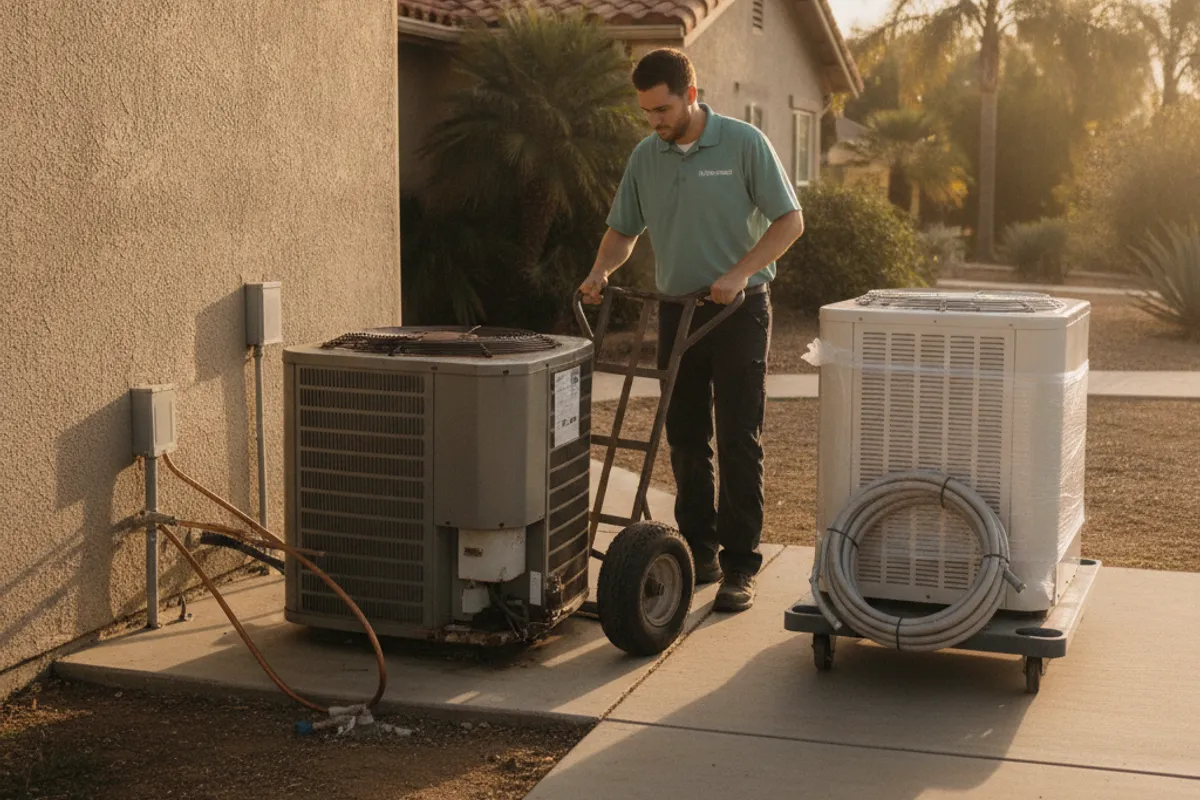
When the AC is due, a heat pump is a real alternative
Many San Diego homes cool with a split system: an outdoor condenser plus an indoor coil or air handler, often sitting with a gas furnace. When that outdoor AC is failing, you can replace it with another air conditioner or with a heat pump that both cools and heats.
That is a design choice, not an automatic upgrade. The indoor equipment, ducts, electrical service, and controls have to match the new outdoor unit.
Heat Pro SD does not quote or perform the swap. We match homeowners with licensed independent HVAC pros.
What actually changes on an AC-to-heat-pump job
You are not only sliding a new box onto the old pad. Ask the proposal to state what stays and what goes.
Outdoor unit. The AC condenser comes out. A heat-pump outdoor unit goes in. Size and location still have to satisfy the new model’s manual and the site. Do not assume the footprint is identical.
Indoor coil or air handler. A standalone air handler may or may not match the new heat pump. If an evaporator coil sits on a gas furnace, you may keep the furnace as backup heat, replace the coil, or replace more of the indoor stack. Compatibility comes from the manufacturer documents for the proposed match, not from a refrigerant family guessed in an article.
Thermostat. A heat pump needs a control that can run heating and cooling from the same outdoor unit, including defrost when the equipment uses it. A cooling-only or furnace-plus-AC thermostat may not be enough. Ask the contractor to name the control in the quote. Do not treat a brand of smart thermostat as required.
Line set. Existing refrigerant tubing may be reusable, or it may need replacement. That decision follows the new equipment’s installation requirements and the condition of the route. Ask for the conclusion in writing.
Dual fuel versus heat-pump-only heat
If the house has a gas furnace, one path is dual fuel: the heat pump cools, and heating can come from the heat pump or the furnace depending on the controls. Another path is heat-pump-only heating, with the furnace removed or left disconnected.
There is no universal outdoor temperature where every San Diego system should switch to gas. Coastal and inland-valley houses often have mild heating loads. Backcountry and mountain addresses can have a different heating story. Ask the contractor to show the heating load and the heat pump’s published capacity at the design temperature. If dual fuel is proposed, ask them to record the changeover setting and why. See hybrid dual fuel heat pumps.
What happens to the old AC
Ask the written scope whether the contractor recovers refrigerant, disconnects, removes, and disposes of the old outdoor unit and any indoor parts being replaced. Refrigerant venting is not a disposal method. Ask who holds the credential for recovery and how that step is documented.
Electrical work is its own scope
A heat pump is an electrical load. The existing AC circuit may or may not be enough. Older houses in neighborhoods such as Normal Heights, City Heights, or University Heights may have limited panel capacity. That is a prompt for an electrical evaluation, not a claim that every house on those streets has a specific panel rating.
Ask the HVAC contractor and, when needed, a licensed electrician to put circuit, disconnect, and panel work in writing. Heat Pro SD does not perform electrical work.
Permits
Ask who pulls the mechanical permit and which office inspects. If circuits or the panel change, ask who pulls the electrical permit. Skipping the permit to “save a day” is a red flag. Manufacturer warranties often require a permitted installation. Confirm that in the warranty document for the proposed equipment.
What to check before you sign
- Exact outdoor and indoor models, not only brand and capacity
- Whether the existing coil or air handler stays, and the document that allows it
- What happens to the thermostat
- Whether the line set is reused or replaced, with a route if it is new
- Permit responsibility and fees
- SEER2 and HSPF2 printed for the matched system
- Separate heating path: heat pump only, or dual fuel with a recorded changeover
For hiring steps, see how to hire a heat pump installer in San Diego.
Heat Pro SD matches homeowners with licensed independent HVAC pros and performs no physical work. The Heat Pro SD line is voicemail with a recording-consent notice. Leave a message at (858) 400-4374.
Can I replace just the outdoor AC unit with a heat pump and keep my furnace?
Sometimes. That is the dual-fuel path. The indoor coil or air handler still has to match the new heat pump. The thermostat and controls have to be configured for both fuels. Ask for that compatibility in writing.
How long does an AC to heat pump replacement take?
Ask the contractor for a sequence for your house. Coil, air-handler, electrical, or line-set work changes the job. This page does not publish a one-day rule.
Do I need to replace my ductwork when switching to a heat pump?
Not automatically. Duct condition, leakage, and airflow still affect comfort. Ask whether testing or repairs are in the scope before you treat the ducts as “fine.”
Ready to compare an AC-to-heat-pump proposal? See our heat pump services or leave a voicemail at (858) 400-4374.