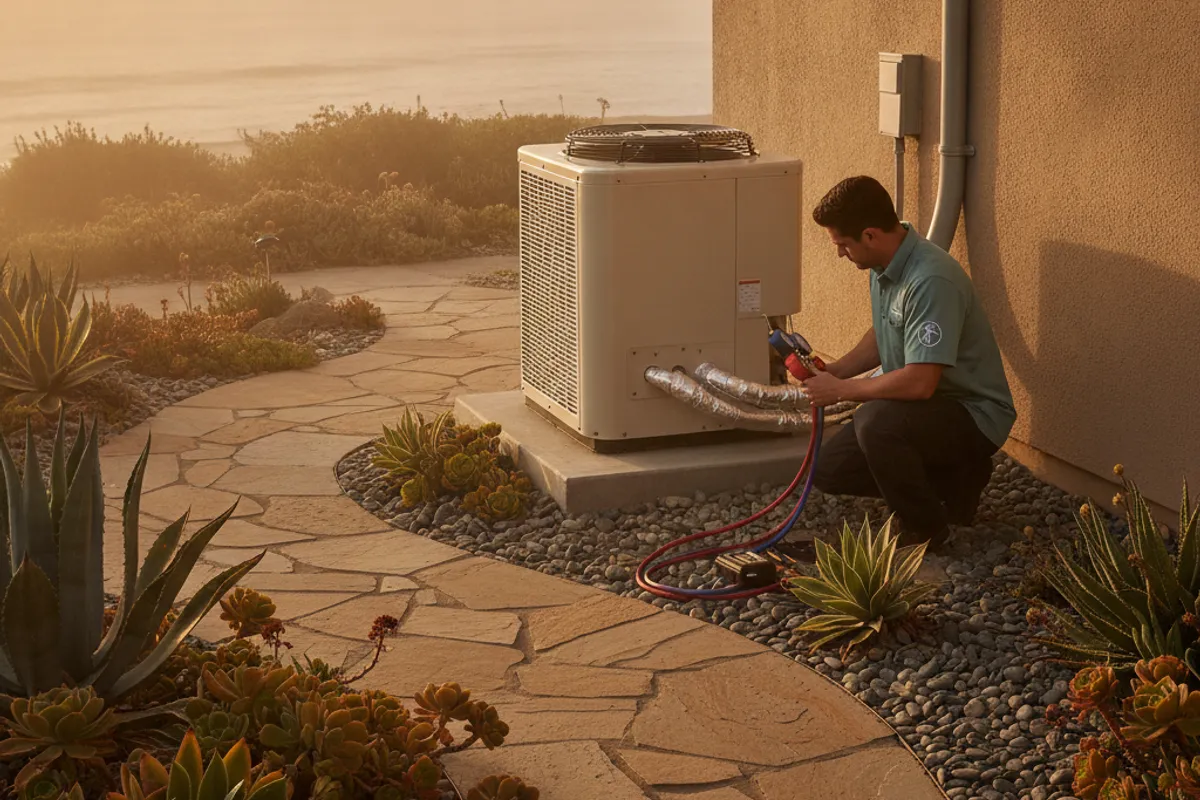
Two different design problems in the same county
San Diego County stretches from the coast to inland valleys and the backcountry. A house in La Jolla and a house in El Cajon can sit a short drive apart and still need different heat pump decisions. This page does not publish county area, neighborhood temperatures, or humidity percentages. The contractor should use the outdoor design condition and the house itself.
ENERGY STAR’s air-source heat pump guidance still starts with Manual J sizing. That calculation is where coastal versus inland shows up.
Coastal San Diego: marine layer, salt air, mild temperatures
The coastal strip from Coronado through Del Mar into Carlsbad and Encinitas is San Diego’s most moderate climate. The marine layer keeps many summer afternoons milder than inland valleys. Winters are also milder than the backcountry. Ask the contractor for the design temperatures they used for your address rather than treating a neighborhood high as a spec.
What this means for heat pump selection:
Cooling capacity still comes from Manual J, not from a smaller-system rule for beach towns. A Pacific Beach house and an inland house of the same floor area can still differ because the outdoor design temperature is different. Ask to see that number and its source.
Dehumidification can matter more than raw cooling. The marine layer brings humidity even when temperatures feel mild. A heat pump that can run at part load has more time to extract moisture than equipment that only blasts on and off. Ask whether the proposed equipment is variable-speed or single-stage, and how the contractor expects it to handle humid mild days.
Salt air is a real equipment question. Homes near the water, including Ocean Beach, Pacific Beach, Mission Beach, Del Mar, Solana Beach, and Encinitas, should ask about corrosion-resistant coatings on the outdoor coil and cabinet. Ask the contractor which coating the proposed model actually has, using the manufacturer’s sheet. This page does not rank brands or claim a one- to two-mile salt radius. An uncoated coil in salt air can corrode. That is why the coating question belongs on the quote.
Coil cleaning is also more important near the coast. Salt deposits reduce heat transfer. Ask the technician how they will inspect and clean the outdoor coil, following the manufacturer and ENERGY STAR maintenance topics.
Inland San Diego: heat, temperature swings, dry air
Inland areas, including El Cajon, Santee, La Mesa, Spring Valley, Lakeside, Poway, Escondido, and the backcountry valleys, see hotter summers and, in some valleys, colder winter mornings than the immediate coast.
What this means for heat pump selection:
Cooling capacity is often the primary driver. The Manual J cooling load for an El Cajon home can be higher than for a coastal home of the same size. System sizing must reflect the actual outdoor design temperature for that address, not a borrowed coastal number.
Heating matters more than on the coast. Inland valley mornings can be cold enough that you should ask for the published heating capacity at the design condition, and whether the design includes supplemental heat. ENERGY STAR discusses backup heat as a conversation with the contractor, especially for colder climates. Use the model’s data, not a round outdoor temperature from this page.
Dry air in summer means dehumidification may not be the primary comfort concern it is on the coast. An inland home still wants equipment that can meet the cooling peak, then run efficiently on milder shoulder-season days.
Day-to-night swings can be larger inland. Variable-speed equipment can change output as the outdoor temperature climbs. Ask the contractor how the proposed model does that, using published performance, not a pair of example clock temperatures.
East county and backcountry: special considerations
Ramona, Julian, Alpine, and Descanso see more extreme weather in both directions than the immediate coast. Julian can see snow. Alpine can see overnight freezing. These areas need the contractor to show low-ambient heating performance for the exact model. Ask for the manufacturer’s published capacity at the outdoor design condition selected for the property. Do not use a 17°F rating from this page as the requirement.
Propane is common in backcountry areas not served by natural gas. The comparison between a heat pump and a propane furnace is a bill-comparison question using your propane invoices and the current electric rate plan, not a claim that heat pumps always win. Our backcountry heat pump guide covers those questions.
Fire zone rules in areas like Ramona and Alpine can affect installation permitting. Check with the local fire authority and the building department if the property is in a designated fire hazard severity zone.
What to ask regardless of location
Coastal or inland, these questions belong on every quote request:
- What outdoor design temperature are you using for the Manual J calculation, and what is the source?
- What corrosion protection does the outdoor unit have? (More important near the coast)
- What is the rated heating capacity at the outdoor design condition for this address?
- Is the system variable-speed or single-stage?
- What published efficiency ratings does the equipment carry, and where can I look them up?
Heat Pro SD matches licensed independent HVAC contractors anywhere in San Diego County. We perform no physical work. Visit the San Diego heat pump service area page or call (858) 400-4374 and leave a voicemail. The line plays a recording-consent notice.
Do heat pumps work differently near the coast in San Diego?
The equipment operates on the same principles, but coastal conditions raise extra questions about variable-speed operation, dehumidification, and coil coatings. Salt air can accelerate coil corrosion, so coating quality and coil cleaning matter more near the water. Ask the contractor to show those details for the proposed model.
What size heat pump do I need for an El Cajon home vs La Jolla?
An El Cajon home can need more cooling capacity than an identically sized La Jolla home if inland outdoor design temperatures are higher. The Manual J calculation will show the actual numbers for your specific home and location. There is no tons shortcut on this page.
Should I worry about salt air affecting my heat pump?
Yes, if the outdoor unit sits where marine air reaches it. Ask your contractor about the manufacturer’s corrosion-resistant coil options for that model. Do not treat a mile radius or a modest upgrade cost as verified numbers here.