The older home challenge
San Diego has a large stock of homes built before 1960. North Park, South Park, Kensington, Normal Heights, University Heights, Golden Hill, and parts of City Heights include Craftsman bungalows, Spanish-style houses, and mid-century tract homes that were not designed with central air conditioning in mind. Some have no ductwork. Some have older wiring or an electrical panel that needs a licensed electrician’s review. Windows may be single-pane. Ceiling heights may be lower than modern construction.
Installing a heat pump in these homes is not impossible. It involves different inspection questions than a 1990s Mira Mesa tract home with a working forced-air system.
No ductwork: what to ask before anyone cuts into the house
Many older San Diego houses were heated, when they were heated at all, by floor furnaces, wall heaters, or baseboard units. Cooling was an afterthought, if it existed. That does not mean every older house lacks ducts. Ask the HVAC contractor to confirm whether ducts exist, where they run, and whether they are usable.
Adding a complete duct system to a bungalow is possible in some houses and a poor fit in others. It can mean cutting through walls, ceiling joists, or under floors. Historic fabric, occupied attics, and knee walls change the labor. Do not accept a duct-install price band as a planning number. Ask for a site-specific scope: where the ducts would go, what finishes would be opened, and what would be restored.
A ductless multi-zone mini-split is one path when ducts are missing or impractical. Wall-mounted indoor heads go in rooms or living areas, and the outdoor compressor sits on a pad or at the side of the house. The typical exterior penetration is a small opening for refrigerant lines and electrical connection. Concealed-duct mini-split heads, which sit in a ceiling cavity and blow through short runs, are another option if the contractor confirms cavity depth and access. ENERGY STAR describes mini-splits as a fit when running ductwork is difficult. The contractor still has to prove the layout on your house.
For the look of a central system without a full new duct tree, ask whether concealed heads are feasible. Do not treat that as cheaper or more expensive than wall heads until the written quote says so.
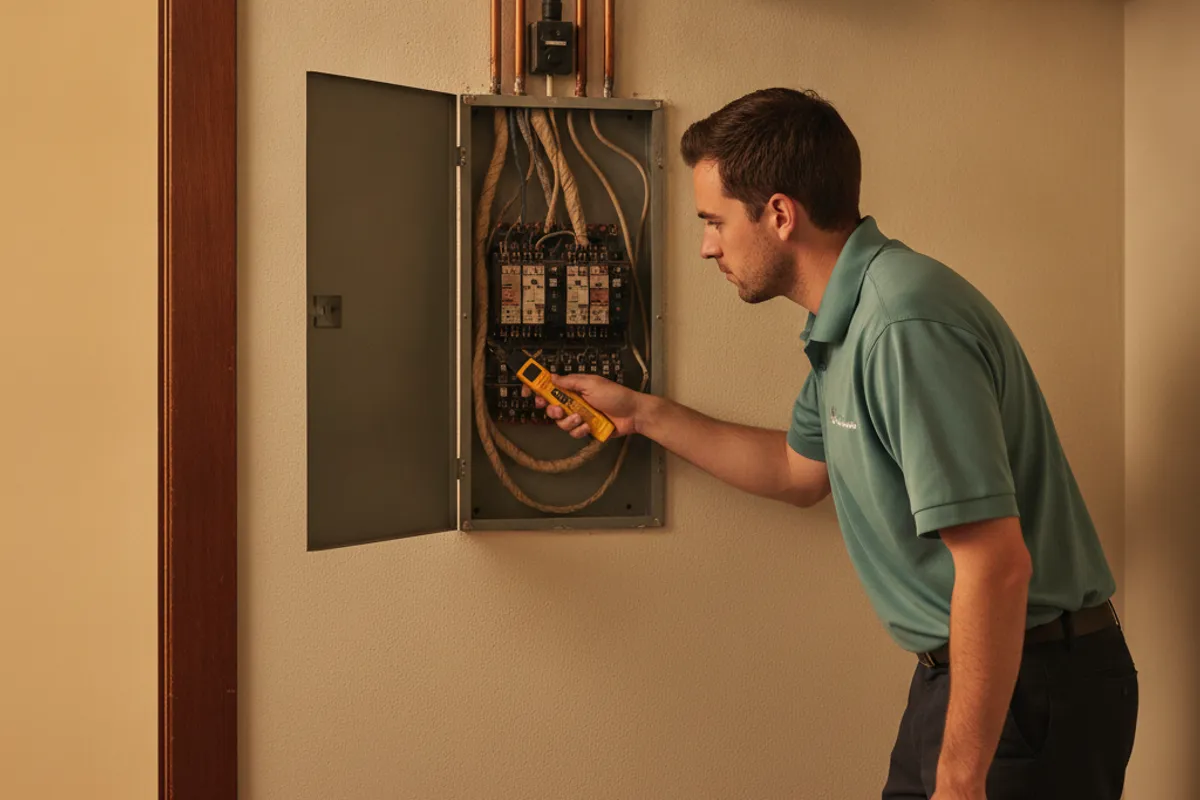
Electrical panels in older homes
Older San Diego homes can have service that is smaller than a modern all-electric house expects. Whether a heat pump fits is not a rule about a round amperage number. It depends on the proposed equipment, the other loads on the panel, and a written electrical load calculation.
Ask a licensed electrician, not only the HVAC bidder:
- What is the existing service rating, and is that confirmed at the panel and the meter, not guessed from the house age?
- What other large loads share the panel (range, dryer, vehicle charging, spa, workshop)?
- Which new circuits the heat pump needs, and whether they can be added without a service upgrade?
- Whether any wiring that would be reused is knob-and-tube or otherwise unsuitable for new HVAC circuits?
Knob-and-tube wiring appears in some pre-1940 San Diego homes. New circuits for a heat pump installation should not be connected to knob-and-tube. An electrician needs to run dedicated circuits from the panel to the outdoor unit and indoor equipment as the design requires.
Have both the HVAC contractor and a licensed electrician assess the panel and wiring before you commit to a system type. The electrical assessment informs what is feasible. Heat Pro SD matches licensed HVAC work. We do not perform electrical work and we do not declare a panel large enough from the curb.
Single-pane windows and insulation
Older San Diego homes often have single-pane windows and limited insulation in walls and attic. A heat pump in a leaky, poorly insulated house works against a larger load. That can raise operating cost and reduce comfort during temperature extremes. It does not by itself forbid a heat pump.
A heat pump installation does not require you to upgrade insulation and windows first. ENERGY STAR’s quality-installation guidance still starts with proper sizing for the house as it actually is. If you are planning a larger project, the sequence matters: ask whether sealing and insulating first would change the load calculation, then size the heat pump to the reduced load.
Ask the HVAC contractor what insulation and window assumptions went into the Manual J. If they used a generic R-value or skipped the attic, the size can be wrong. Do not treat a single R-value as a San Diego requirement on this page. Ask what the current energy code and the load calculation require for your address.
A heat pump sized for a poorly insulated house may be oversized after insulation is added, which can lead to short-cycling. If both projects are in your plans, insulate first when you can, then size the equipment.
Sizing for smaller rooms and lower ceilings
Mid-century and pre-war San Diego homes often have lower ceiling heights than newer construction. Smaller room volumes change the air that has to be conditioned. A Manual J calculation accounts for ceiling height, so make sure the installer is using actual room dimensions, not a square-footage rule of thumb.
Mini-split indoor heads come in a range of capacities. Right-sizing each head matters: an oversized head in a small room can short-cycle and dehumidify poorly. Ask the contractor to show the room-by-room capacities rather than a round BTU starting size from a brochure.
Working with contractors on older homes
Not all HVAC contractors are equally comfortable working in older homes. Some crews prefer straightforward installs in newer construction and may underestimate routing refrigerant lines through a 1940s house with narrow wall cavities or an occupied attic with knee walls.
When getting quotes, describe the construction in detail: when it was built, whether it has a finished attic, what the ceiling structure looks like, and where you think the outdoor unit should go. A contractor who asks follow-up questions about the structure is more likely to give you an accurate quote than one who prices the job before seeing the house.
Heat Pro SD matches homeowners with licensed independent HVAC contractors serving San Diego’s older neighborhoods. We perform no physical work. Visit the San Diego heat pump service area page or call (858) 400-4374. The line routes to voicemail with a recording-consent notice.
Can I install a heat pump in an older San Diego home with no ductwork?
Often yes, if a licensed HVAC contractor confirms a ductless or concealed-duct design that fits the rooms, line routes, and outdoor placement. Individual wall-mounted heads can serve rooms through small exterior penetrations. That still needs a site visit. It is not a DIY layout.
Do I need to upgrade my electrical panel for a heat pump in my older home?
It depends on the existing service, the other loads, and the equipment proposed. A licensed electrician should assess your panel and wiring before you commit. Do not treat a round amperage figure as a yes or no.
Should I insulate before installing a heat pump?
Adding insulation before installing a heat pump allows the installer to size for the actual load and reduces the chance of oversizing. If both projects are in your plans, insulate first when possible. Ask both contractors to share the load assumptions in writing.