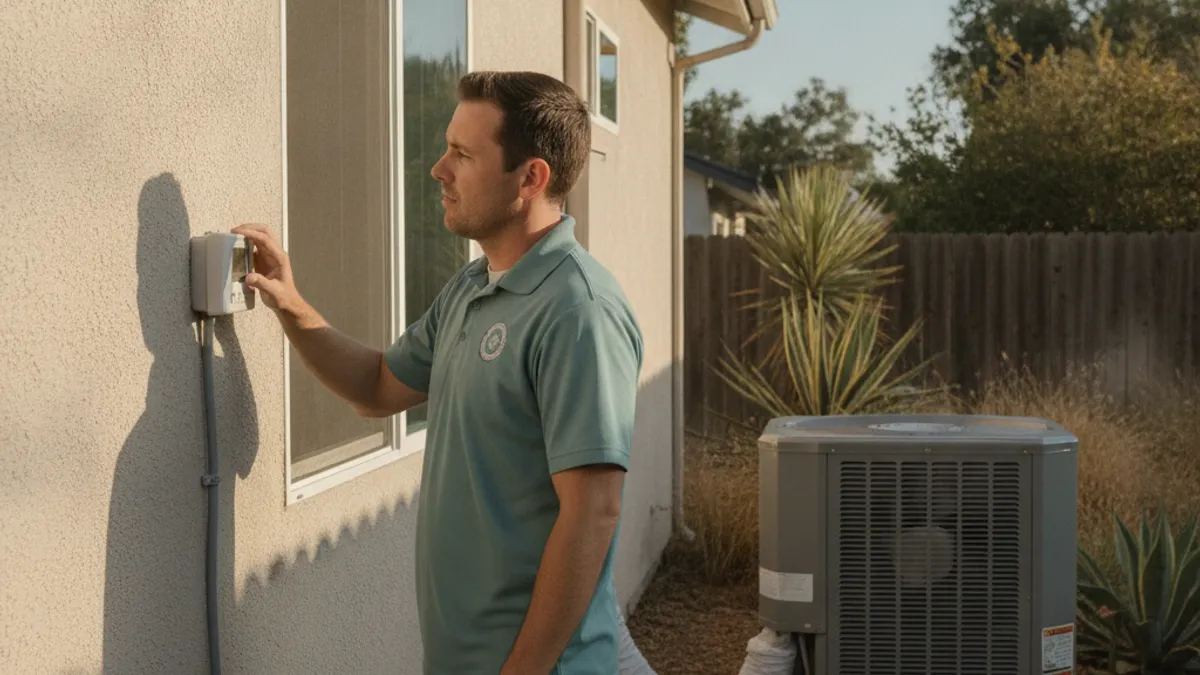
Start with the settings before you assume the worst
A heat pump blowing warm air when you want cold can be a control setting, restricted airflow, or a mechanical problem. The licensed contractor has to diagnose the cause. Before you assume a major failure, check the basics you can see without opening equipment.
Is the thermostat actually set to cool, not heat or auto? ENERGY STAR notes that auto mode can switch modes on an unseasonably warm or cold day, and it recommends setting the system to heat or cool instead. Also check the fan setting. If it is set to “on” instead of “auto,” the blower runs continuously, including between cooling cycles when the air naturally feels less cold. That alone can convince a homeowner something is broken when the equipment is still cycling.
The reversing valve is the heat pump-specific question
Unlike a straight air conditioner, a heat pump has a reversing valve that switches refrigerant flow so the system can heat or cool. If that valve sticks, partially or fully, in heating position, the system can run while delivering warm air even with the thermostat set to cool. A licensed technician has to confirm whether the valve, the controls calling for it, or something else is at fault. This is a repair diagnosis, not a reason to assume full system replacement.
Ask the contractor whether they found the valve stuck, how they confirmed it, and whether other outdoor components show corrosion or damage. Coastal salt air can affect outdoor parts over time. That is a question for the inspection, not a ranking of which neighborhoods fail most often.
A dirty air filter or blocked coil
A filter that has not been changed according to the equipment instructions can restrict airflow across the indoor coil. Without enough air moving across it, the coil cannot absorb heat from indoor air as designed, and cooling capacity drops even if other parts still run. Check the filter first. ENERGY STAR tells homeowners to inspect, clean, or change filters when they are visibly dirty or when the equipment indicates it.
Outdoors, the outdoor coil can collect leaves, dust, or spider webs, especially near canyons or mature landscaping. A coil caked in debris cannot reject heat properly, which shows up as poor cooling indoors. Photograph what you can see from a standing position. Do not spray chemicals into the cabinet or remove guards.
A refrigerant leak
If refrigerant charge has dropped because of a leak, a heat pump loses its ability to move heat effectively in either direction. That can show up gradually, with cooling declining over weeks or months, rather than all at once. Possible leak points include coil surfaces and line connections. Coastal salt air is one factor a technician may inspect for. It is not a substitute for finding the actual leak.
A refrigerant leak requires a licensed technician to locate, repair, and recharge the system. It is not a DIY fix. Running a system low on refrigerant can damage the compressor. Ask the contractor to put the leak location and the repair plan in writing before you approve refrigerant work.
A failing compressor or capacitor
The compressor is the heart of the system. A weak capacitor, the component that helps the compressor start, can produce symptoms such as the outdoor unit humming without running, or short-cycling on and off. A failing compressor is a larger diagnosis. Age alone does not decide repair versus replacement. Ask for the test results, the equipment age from the nameplate, and a written comparison of repair versus replacement for that unit.
Check the outdoor unit itself
A heat pump has two halves working together. If the outdoor condenser is not running, the indoor blower can still push air at whatever temperature is already in the ductwork, which reads as warm. Walk outside and confirm whether the outdoor fan is spinning when the system calls for cooling. If it is silent, note the outdoor disconnect switch, usually a small gray box on the wall near the unit, and whether a breaker looks tripped. Do not keep resetting a breaker that trips again. A unit that has sat unused, such as a mini-split serving a rarely used guest casita, still needs a licensed diagnosis if it will not start after you confirm the thermostat and power are on.
A quick self-check before you pick up the phone
Run through this order: thermostat mode set to cool, not heat or auto. Fan setting on auto, not on. Filter checked against the manufacturer instructions and replaced if it is visibly gray or clogged. Outdoor unit fan actually spinning when the system calls for cooling. Breaker and disconnect switch both on, observed without opening covers. If all of that checks out and the air is still warm, you are looking at a technician diagnosis, not more guessing at settings.
When to call versus when to keep troubleshooting
Check the thermostat mode and fan setting, and check or replace the filter, before calling anyone. Beyond that, warm air from a heat pump set to cool is a signal to call a licensed HVAC contractor rather than keep guessing. Reversing valve issues, refrigerant leaks, and compressor problems all require diagnostic tools and refrigerant handling certification.
Why does my heat pump blow warm air only sometimes?
Intermittent warm air can point to a reversing valve that is sticking rather than fully failed, a weak capacitor, a control that is switching modes, or airflow that changes with filter loading. A licensed technician has to test which of those is happening. Both a sticking valve and a weak capacitor tend to get worse over time rather than resolve on their own.
Can I fix a reversing valve myself?
No. Reversing valve repair involves refrigerant recovery and recharging, which requires EPA certification and specialized equipment. This is licensed technician work.
Is warm air from a heat pump an emergency?
It is uncomfortable. It is not automatically a fire or electrical emergency. If you see smoke, sparking, a burning odor, or exposed wiring, stop the test and contact emergency services or the utility. If there is no immediate danger but you have no cooling during a heat spell in an inland community like El Cajon or Santee, treat comfort and health as the reason to get a licensed contractor promptly, without treating it as a same-hour promise from Heat Pro SD.
If your heat pump is blowing warm air and the basics check out, start at heat pump repair. Heat Pro SD matches San Diego County homeowners with licensed independent HVAC pros. We perform no physical work. Call (858) 400-4374 and leave a voicemail. The line plays a recording-consent notice and is not answered live.