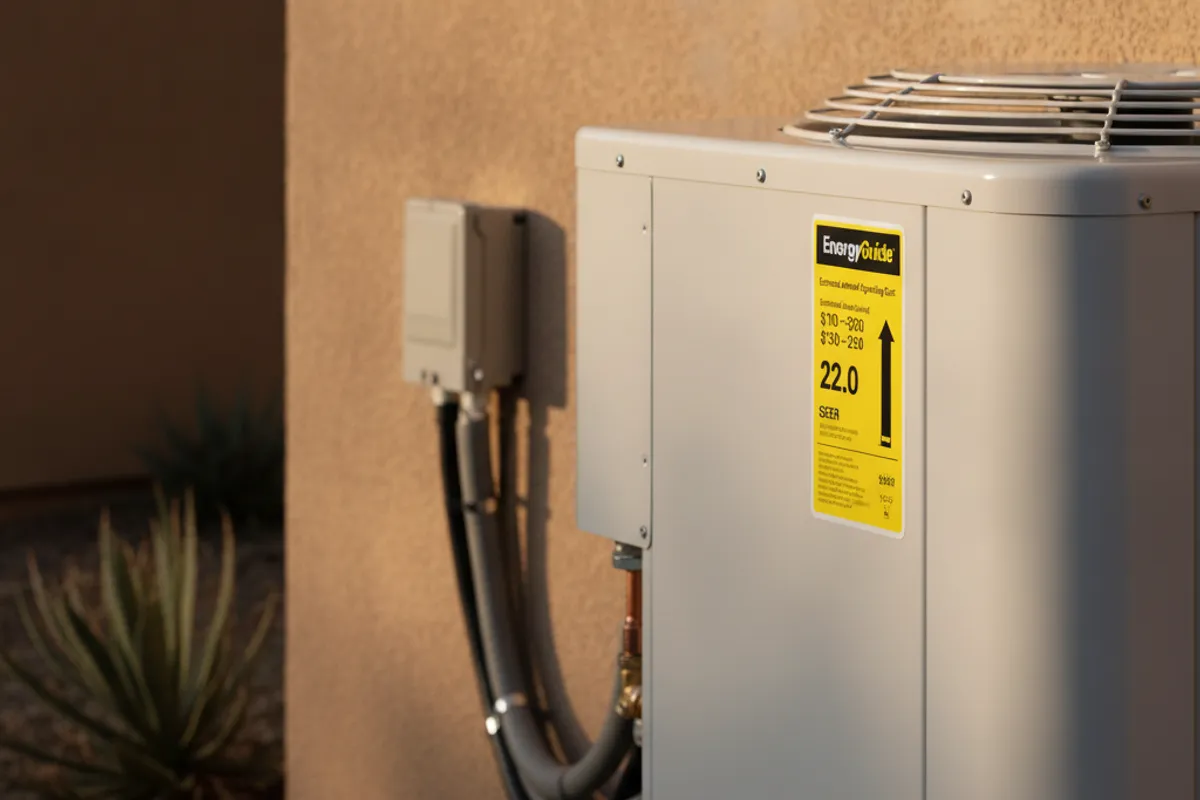
What the efficiency labels on a quote actually are
SEER2 and HSPF2 are seasonal efficiency ratings printed for a matched heat pump system. They appear on data sheets, EnergyGuide labels, and contractor proposals. They are tools for comparing like with like. They are not a promise about your SDG&E bill.
Heat Pro SD does not sell equipment and does not publish a target rating for San Diego homes. We match homeowners with licensed independent HVAC pros.
SEER2: cooling efficiency
SEER2 is Seasonal Energy Efficiency Ratio, version 2. It describes cooling output over a test season relative to the electricity used in that test. A higher SEER2 means the tested system used less electricity for the cooling it delivered in that procedure.
SEER2 is measured under a harder test than the older SEER rating. The same piece of equipment therefore scores lower under SEER2 than under SEER. The two numbers are not directly comparable. If one quote shows SEER and another shows SEER2, you are not looking at the same scale. Ask both bidders for SEER2 on the exact outdoor and indoor combination they proposed.
New equipment sold has to clear a federal minimum. California code can add its own rules. This page does not state those minimum figures. Ask the licensed installer to write which current standard applies to the quoted system and to show that the listed combination meets it.
Do not treat a higher SEER2 as a required San Diego target. Coastal and inland houses run cooling differently. The useful comparison is the ratings on competing quotes for systems that also match the load, ducts or zones, and controls.
HSPF2: heating efficiency
HSPF2 is Heating Seasonal Performance Factor, version 2. It describes heating output over a test season relative to electricity used in that test. Higher is more efficient in the test.
HSPF2 is the heating counterpart to the same ratings overhaul that produced SEER2. Compare HSPF2 to HSPF2. Do not mix an old HSPF number with a new HSPF2 number.
San Diego County winters are milder than much of the country, especially on the coast. That does not make HSPF2 meaningless. It means heating runtime varies by address. Inland and backcountry houses can have a longer heating conversation than a beach house. Use the HSPF2 on the proposal, plus the contractor’s heating load, not a claim that heating “barely matters” everywhere in the county.
Other labels you may see
Some data sheets also list EER or EER2, which are efficiency ratings at a stated test condition rather than a full season. Some programs and some code forms ask for those values. If a program or inspector asks for them, get them from the equipment listing. Do not use this article as a Title 24 calculator.
Incentive programs, when they exist, key off current listings. Confirm those on the administrator’s page the day you apply. See SDG&E heat pump rebates for how to verify programs, not as a promise that a rating qualifies you.
How to compare quotes with these ratings
Line up two or three written proposals and check:
- SEER2 and HSPF2 for each matched system, with model numbers
- Whether the equipment is single-stage, two-stage, or variable-speed, as the contractor names it
- Whether the load calculation and duct or zone plan are the same job
- Price as an itemized scope, not as a payback story
Do not convert a SEER2 gap into annual kilowatt-hours or dollars on this page. Your rate plan, hours of use, and house load are not in a blog example. If a contractor shows operating-cost math, ask for the rate, hours, and model behind it, then check your own bills. Our running-cost worksheet is the place for bill-based comparison, still without a county average.
A high SEER2 on a mismatched indoor coil, leaky ducts, or a wrong thermostat is not the system you were sold. Ratings travel with the listed combination and the installation.
Heat Pro SD matches homeowners with licensed independent HVAC pros and performs no physical work. The Heat Pro SD line is voicemail with a recording-consent notice. Leave a message at (858) 400-4374.
What is a good SEER2 rating for a San Diego heat pump?
The useful number is the SEER2 printed for the matched system on a quote that also fits the load. This page does not publish a local target range. Compare ratings on competing proposals and ask which current minimum the installer is meeting.
How is SEER2 different from SEER?
SEER2 uses a harder test than SEER, so the same unit scores lower under SEER2. They are not the same scale. Compare SEER2 to SEER2.
Does HSPF2 matter much in San Diego?
It matters for heating. How much it moves your bill depends on your house and how often you heat. Compare HSPF2 on the quotes you actually have. Do not skip heating data because someone called San Diego winters mild.
Ready to compare equipment labels on real proposals? See our heat pump services or leave a voicemail at (858) 400-4374.