The short answer
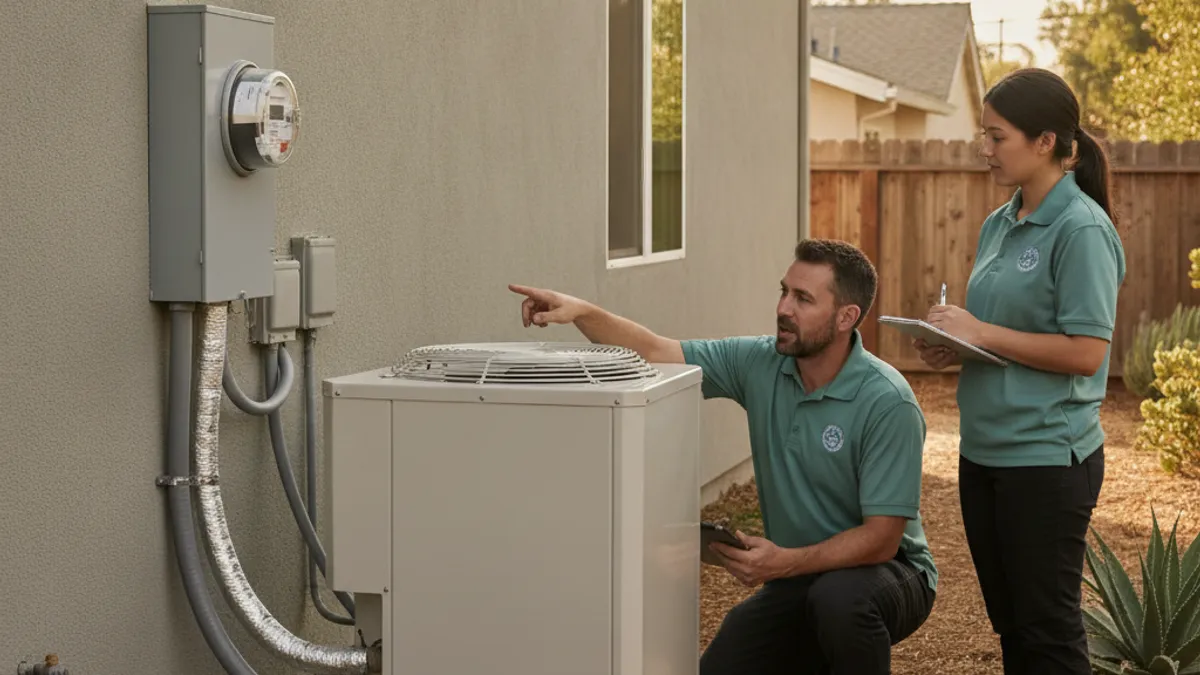
The heat-pump unit runs on electricity and does not burn gas to heat or cool the home. The complete HVAC system can still use gas if the heat pump is paired with a gas furnace in a dual-fuel setup. Check both the outdoor unit and indoor equipment before assuming the whole system is all-electric.
How it heats without burning anything
A gas furnace makes heat by combustion, burning fuel to create hot air that gets pushed through ductwork. A heat pump does something fundamentally different: it moves existing heat from one place to another using a refrigerant cycle and a compressor, the same basic mechanism as a refrigerator, just running in reverse. In cooling mode, it pulls heat out of your house and dumps it outside. In heating mode, it reverses that flow and pulls heat out of the outdoor air, even when that air feels cold, and moves it inside.
Because it moves heat rather than converting fuel into heat, an air-source heat pump can deliver more heat energy than the electrical energy it consumes. ENERGY STAR says a certified air-source heat pump can deliver up to three times as much heat energy as the electricity it uses. Actual performance depends on the equipment, outdoor conditions, sizing, ducts, controls, and installation. See ENERGY STAR’s air-source heat pump guide.
Why this question comes up so often
A lot of homeowners researching heat pumps are really asking a bigger question: can I get rid of gas at my house entirely? A heat pump for space heating and cooling answers part of that. The other major gas appliance in most homes is the water heater, and that has a fully electric answer too, a heat pump water heater, which works on the same heat-moving principle rather than a resistance element or a gas burner.
A heat pump can remove gas combustion from space heating, and a heat pump water heater can provide electric water heating. Whether those changes remove gas service from a particular home depends on every remaining gas appliance and the utility account, so inventory the water heater, range, dryer, fireplace, and other connected equipment separately.
What this means for your utility bill
Changing from gas heat to electric heat changes which equipment uses energy and when it uses it. The bill result depends on the old and new equipment, weather, thermostat settings, rate plans, household use, and whether any gas appliances remain. Compare your own usage and current utility rates rather than assuming savings or the end of a gas account.
The one setup where gas sticks around: hybrid dual-fuel systems
A hybrid, or dual-fuel, system pairs an electric heat pump with a gas furnace. Its controls decide which heating source operates under the configured conditions. Ask the contractor to document the equipment pairing, control logic, and changeover setting rather than assuming the furnace is only an emergency backup.
Does San Diego’s mild climate matter here
Climate belongs in the equipment decision because air-source heat-pump capacity and efficiency vary with outdoor temperature. Ask for the model’s rated heating capacity at the design condition used for your address. ENERGY STAR also recommends choosing equipment suited to the home’s climate and considering how backup heat would be integrated when needed.
What about the stove and the dryer
A gas range, dryer, fireplace, water heater, or other appliance is separate from the HVAC system. Replacing the furnace does not require replacing all of them in the same project. It also does not mean the gas account can be closed while another connected appliance remains.
Do heat pumps need a gas line at all?
The heat-pump equipment does not need a gas connection. A dual-fuel system does because its paired furnace burns gas. When a gas furnace is removed, have the contractor identify who will address the existing gas connection and any related venting within the permitted scope.
Is an all-electric home more expensive to run than a gas home?
It depends on the old and new equipment, current gas and electric rates, weather, controls, and household use. Request a calculation that shows its inputs. Do not treat a national estimate or another home’s bill as a promise for your address.
Can I switch from gas heat to a heat pump without rewiring my whole house?
The answer requires an electrical load review and the selected equipment’s installation requirements. Some projects use the existing service; others need circuit or service changes. Ask the HVAC contractor and electrical provider to identify those items before you compare proposals.
To find out what an all-electric heat pump setup would look like for your specific home, see our heat pump replacement page or call (858) 400-4374.
Heat Pro SD is a referral service that matches San Diego County homeowners with licensed independent heat pump pros and performs no physical work. Call (858) 400-4374 to request a match.